




Circular 05/2023: Initiatives to Assist SMEs in Public Procurement which was issued today, 28 March 2023. This circular has been developed by the Office of Government Procurement (OGP) following an extensive consultation process involving both public bodies and SME representatives. It is designed to further enable SMEs to compete for public contracts and replaces Department of Public Expenditure and Reform Circular 10/2014.
The circular sets out positive measures for contracting authorities to take to promote SME participation in public procurement. Included amongst the measures are increases to the national advertising thresholds for goods, services and works.
The OGP has created a dedicated webpage where public bodies can find further information on the circular, including FAQs.
The Spring edition of the IAE newsletter has been published and includes:
INTEGRATED LAND USE & TRANSPORTATION STRATEGY FOR DUBLIN Published January 2023
This is part of the output from the IC 70 group. The IC 70 Working Group was established by the Royal Institute of the Architects of Ireland (RIAI) and the Irish Academy of Engineering to recommend how Irish cities should best be developed in the period to 2070. Gerry Duggan FIAE has ably represented the Academy on the group. In that context it has undertaken a major review and published a report and recommendations in 2022 of how Galway city could be developed over this future period. The present study is a part of the group’s continuing work programme.
CAETS Energy report – Towards Low-GHG emissions from Energy use in selected sectors
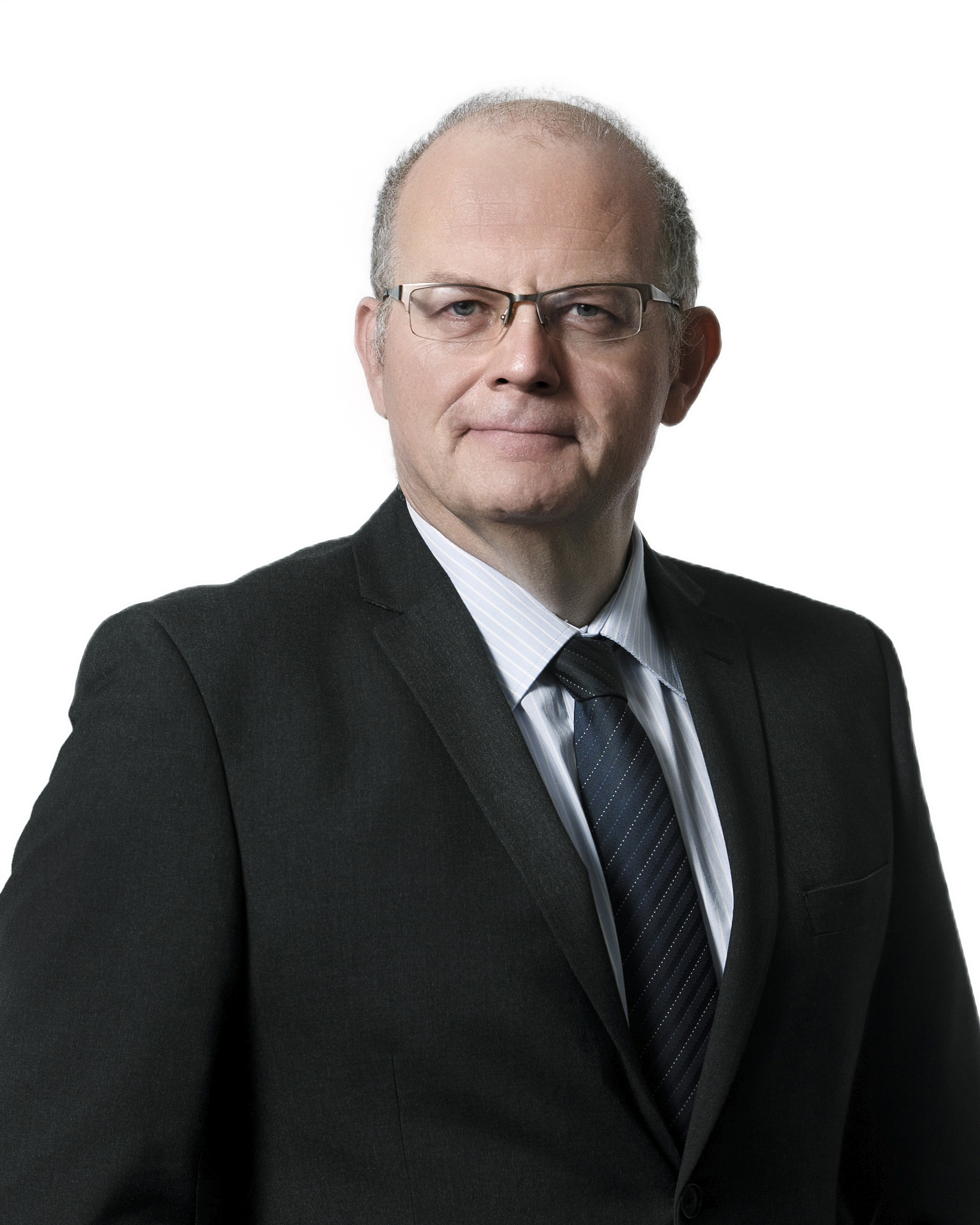
James Kavanagh elected as ACEI President for 2023-2024
James Kavanagh, CEng, EurIng, BSc (Hons) Eng, DipEng, MCIBSE, MIEI, MInstD, FConsEI, was elected ACEI President at the association’s AGM on 24 March 2023. James has served as a member of the ACEI Executive Board since 2018 and elected as Honorary Treasurer in 2019, 2nd Vice-President & Honorary Treasurer in 2020 and 2021 and 1st Vice-President in 2022.
James holds a Honours Degree in Building Services, is a Chartered Engineer, Registered European Engineer, Fellow of the ACEI and a member of the Institute of Directors with over 30 years’ experience at the forefront of awarding winning design projects. He is also a professional grade membership interviewer with Engineers Ireland and a member of the TU Dublin Building Engineering Industrial and Academic Steering Group.
James is the CEO of Varming Consulting Engineers and is the fourth member of Varming to act as President of the Association. With a history spanning over 75 years Varming’s professional service is designed to enhance the long-term value of a building while playing a hugely significant role in ensuring the sustainability of a building through the creative use of renewable energy, low carbon technologies, and smart energy management.
James will continue the work of previous ACEI presidents especially in regard to implementing ACEI’s Strategy 2022 – 2025. He will also focus on delivering value to the ACEI members while fostering and enhancing their standing within the Consulting Engineering profession and Built Environment sector.
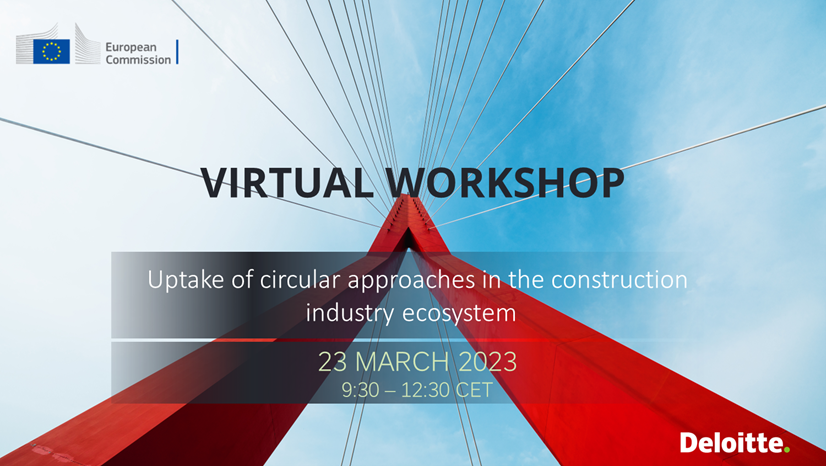
EFCA in workshop on Circular Approaches in the Construction Ecosystem
A workshop was held to support a study for the European Commission, on the application of circular approaches in the construction industry and the relevant measures that are required. Amongst other things, stakeholders considered a shortlist of indicators that could eventually be adopted. Sustainable Design Expert Wouter Schik from Arcadis, gave examples of circularity approaches used recently in the Netherlands and recommended thinking wider than just product or building level. Further information is available here.

Publication of Transition Pathway for Construction
The European Commission’s Directorate-General for Internal Market, Industry, Entrepreneurship and SMEs (DG GROW) has published the eagerly anticipated Transition Pathway for Construction. The EU Updated Industrial Strategy, from which this document originates, calls for a quick transition towards green and digital industrial ecosystems, with each sector required to develop specific and achieveable plans for transition. Construction is the second largest industrial ecosystem in the EU and employs over 25 million people. A key industry in the delivery of the EU Green Deal and the Digital Decade it faces various challenges from the aftermath of Covid-19, digital transformation and climate crisis. EFCA welcomes the document and will comment in more detail in due course. Further information is available here.

EFCA Future Leaders’ Competition 2023 – Jury announced
EFCA Future Leaders’ Competition 2023 is open to all professionals aged 35 and under working for member firms of EFCA national member associations. The competition aims to showcase the talent of Europe’s next generation of leaders in the consulting engineering sector. This year, the jury will be chaired by former EFCA president Kevin Rudden (CEO of Garland), who will be joined by Marcin Mikulewicz (President of Management Board of Globtank) and last year’s winner, Federico Foria (Geotechnics, Geology and Hydraulics Department Manager at ETS). With their expertise and experience, the jury members will assess the submitted projects based on various criteria, including technical achievements, leadership and social and community contributions. We are excited to see the incredible projects and achievements of the participants and look forward to recognising and celebrating the exceptional young talent within the consulting engineering sector. Further information is available here.

EP adopts revised EPBD
The European Parliament has voted on a proposed revision of the Energy Performance of Buildings Directive, which aims to substantially reduce greenhouse gas emissions and energy consumption in the EU building sector. The vote effectively approved the target for all new buildings to be zero-emission by 2028, with the deadline for new buildings occupied, operated or owned by public authorities in 2026. Member States will establish national renovation plans and support measures against energy poverty. Certain buildings will be excluded from the new rules, but MEPs have allowed Member States to adjust the new targets in a limited share of buildings depending on economic and technical feasibility and availability of skilled workforce. Further information is available here.
The FIDIC CEO’s Update has just been published providing the latest FIDIC activities, initiatives and events:
New guidance issued to help FIDIC contract users navigate troubled times
FIDIC welcomes World Bank’s steps to promote greater value in procurement
Projects portal now live on Infrastructure Global
GEOBIM 2023 event in Rotterdam
Prepare your entries now for this year’s FIDIC Global Infrastructure Awards
The Minister for Public Expenditure, NDP Delivery and Reform, Paschal Donohoe, announced on 21st March the introduction of a cap on liability (also referred to as a ‘liability cap’) in public works contracts and the standard conditions of engagement for consultants. The introduction of liability caps will support the delivery of vital projects under the National Development Plan (NDP). The Press Release is available HERE. The OGP will publish the amended forms of contract and associated schedules, beginning with the standard conditions of engagement for consultants by the end of March. The suite of public works contracts will follow early in Q2 of 2023.
Coincidentally, a Construction Industry Council (CIC) CIC submission to Government was provided to Minister Donohoe yesterday by Chair Sarah Ingle, ACEI Secretary General. This requests on behalf of all CIC members, the introduction of Net Contribution Clauses in construction contracts to further assist consultants and contractors in the built environment sector in the delivery of the NDP objectives.
Dublin City Council manages the Living City Initiative (LCI) on behalf of the Revenue Commissioners. The aim of the LCI is to incentivise owners/investors to carry out the necessary refurbishment and/or conversion works to upgrade existing accommodation or bring derelict/disused properties back into use. Examples include bringing vacant upper floors above a shop into residential/office use or carrying out refurbishment work to one’s own home. The minimum cost of works that required for qualification for the scheme is €5,000. A property in the scheme can be a house, apartment, shop or any kind of structure and can include all or part of a property. Under Budget 2023, the Living City Initiative has been extended to 31st December 2027.
Owners and investors can claim tax relief on the costs of refurbishment and/or conversion of a residential property either as income tax relief (for owner-occupied residential) or capital allowance (for rented residential) in Dublin, Cork, Limerick, Galway, Waterford and Kilkenny. A sample of eligible costs are:
- Professional fees including Architects and Engineer fees
- Building materials
- Hire of equipment
- Labour cost
- Administrative overheads
- Painting and decorating
- Fees paid to local authorities for the provision of certain infrastructure and services.
Properties must be constructed before 1915 and lie within the Special Regeneration Area (SRA) which includes Dublin 1, 2, 7 and 8. Please refer to the LCI Map which delineates the boundary.

EFCA participates in NEBAcademy Design Workshop
EFCA participated in the New European Bauhaus Academy’s design workshop in Izola, Slovenia. The NEBAcademy aims to promote new skills required to make the construction sector sustainable, digital, and inclusive. A lack of skills and knowledge is hampering the green transition and the Academy hopes to resolve this by offering off- and online training modules for circularity and the use of bio-based materials for the construction ecosystem, amongst other things. Academy Hubs across the EU will offer in-person training. The first one has been established at the University of Primorska in Slovenia. Further information is available here.

Consulting industry calls for hardship and price revision clauses in EU service contracts
As the pandemic and other unforeseeable events continue to disrupt the world, the consulting industry, represented by EFCA, for the European Engineering Consultancies and the European Federation of Management Consultancies Associations (FEACO) have written to DG INTPA, European Commission, calling for the introduction of hardship and price revision clauses in INTPA service contracts. A hardship clause would allow both parties to renegotiate the terms of the contract when an unforeseeable event fundamentally alters the financial terms, in reality. Further information is available here.

EFCA promotes diversity in engineering on International Women’s Day
As the world celebrated the International Day of Women, EFCA wants to highlight the importance of promoting diversity in engineering. The world is facing some massive challenges, including the climate emergency. Engineers are the invisible rock stars in the construction value chain. Their skills and expertise are crucial to solving current and future global challenges, but the consulting engineering sector is experiencing a talent shortage. More women in engineering can help to address this shortage. One of EFCA’s relevant actions is participation in the EU Pact for skills. The federation is working with its members to promote young talent in the sector. Further information is available here.
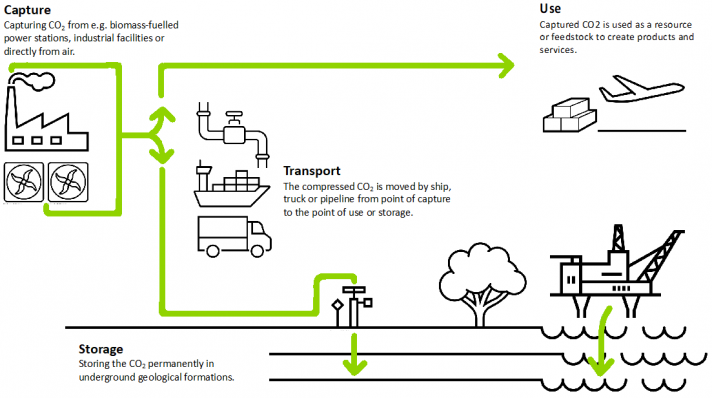
CCUS Forum launches website to drive climate action in the EU
Carbon capture, storage and utilisation are indispensable for reaching the European Union’s climate targets, in particular when it comes to decarbonising industries with emissions which are hard-to-abate. To support the European Commission in the development of CCUS policies and facilitate a stakeholder dialogue, the CCUS Forum was established. The Forum’s work started in 2021. The European Commission has now set up a landing page where interested parties can access all the meeting documents and post papers. Further information is available here.

ACEI congratulates Professor Orla Feely being appointed as President of University College Dublin. Professor Feely is currently Vice-President for Research, Innovation and Impact. She succeeds Professor Mark Rogers who has been Acting President since March 2022 and will take up office on 1 May 2023. UCD’s announcement is available here.